Visual Design Tools
As developers spend less time writing code and more time architecting and engineering, software development is going visual to help us optimize our context engine and stay in control.
Intent Architect provides powerful visual designers for modeling applications, allowing you to express every layer of your system’s design, from domain and services to architecture, in a way that’s intuitive, precise, and always in sync with your codebase.
Visuals are a highway to the brain, and by expressing complex systems in visual formats (e.g. entity-relationship diagrams), teams can quickly interpret and reason about design and architecture that would otherwise require deep codebase immersion. Unlike static diagrams or external modeling tools, these designs are living blueprints: every change you make is reflected in the codebase, minimizing cognitive debt by design. Beyond providing visibility, they form the platform’s powerful context engine, driving all AI agents and code generation systems.
With Intent Architect, you can design and reason about complex systems visually rather than reverse-engineering structure from code. It’s the difference between seeing your system’s design and guessing at it.
Key benefits
🧠 Easier comprehension of complex systems
Visualize domains, services, and relationships at a glance, no need to mentally reconstruct architecture from thousands of lines of code.🤝 Collaborative design and validation
Shared visual models give architects and developers a common language for discussion, review, and decision-making.🗺️ Living documentation
Designs are always synchronized with the codebase, what you see is a true reflection of what’s in the source, not an outdated diagram, ensures architecture stays consistent with evolving codebase.🚀 Reduced onboarding friction
New team members can explore and understand the system architecture visually, accelerating their ability to contribute meaningfully.
Design visually
Model your systems through Intent Architect’s visual designers, model domains, services, integrations and much more. Each designer helps you model your applications in a structured, intuitive way. Behind the scenes, every element you draw is represented as structured metadata, saved alongside your source code in human-readable files. You’re never disconnected from your design, it lives right inside your solution.
💡 Visual modeling turns complex systems into clear, collaborative blueprints for innovation.
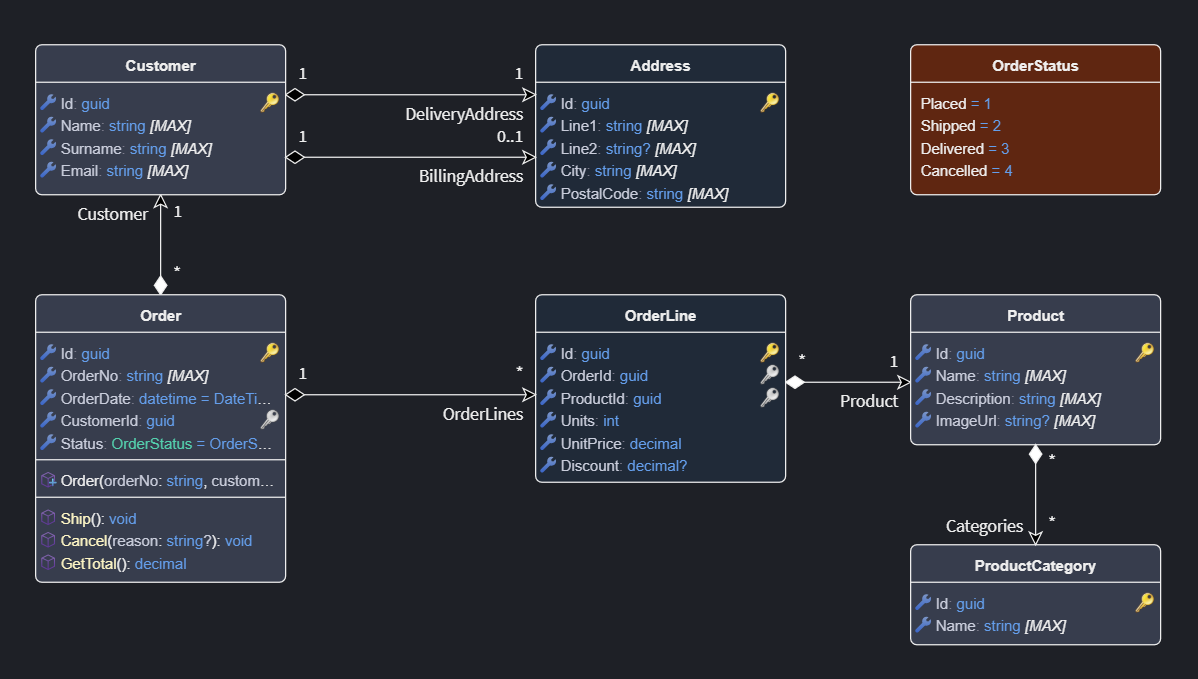
Domain modeling
Visual domain modeling lets you define your system’s core entities, relationships, and logic in a clear, structured way forming the base from which your applications are built.
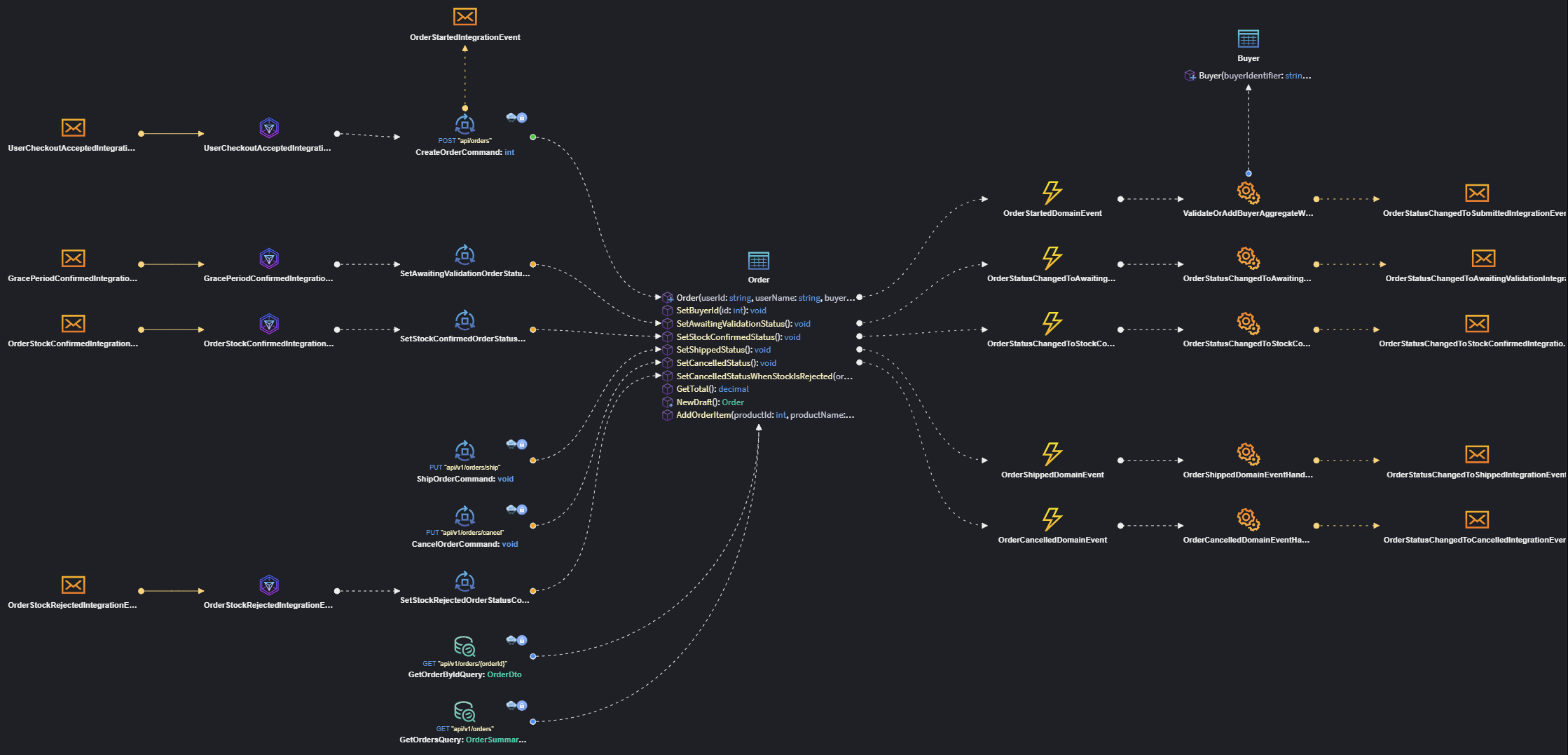
Application modeling
Visual application modeling defines how your system behaves, mapping services, contracts, and integrations that connect your applications into a unified flow
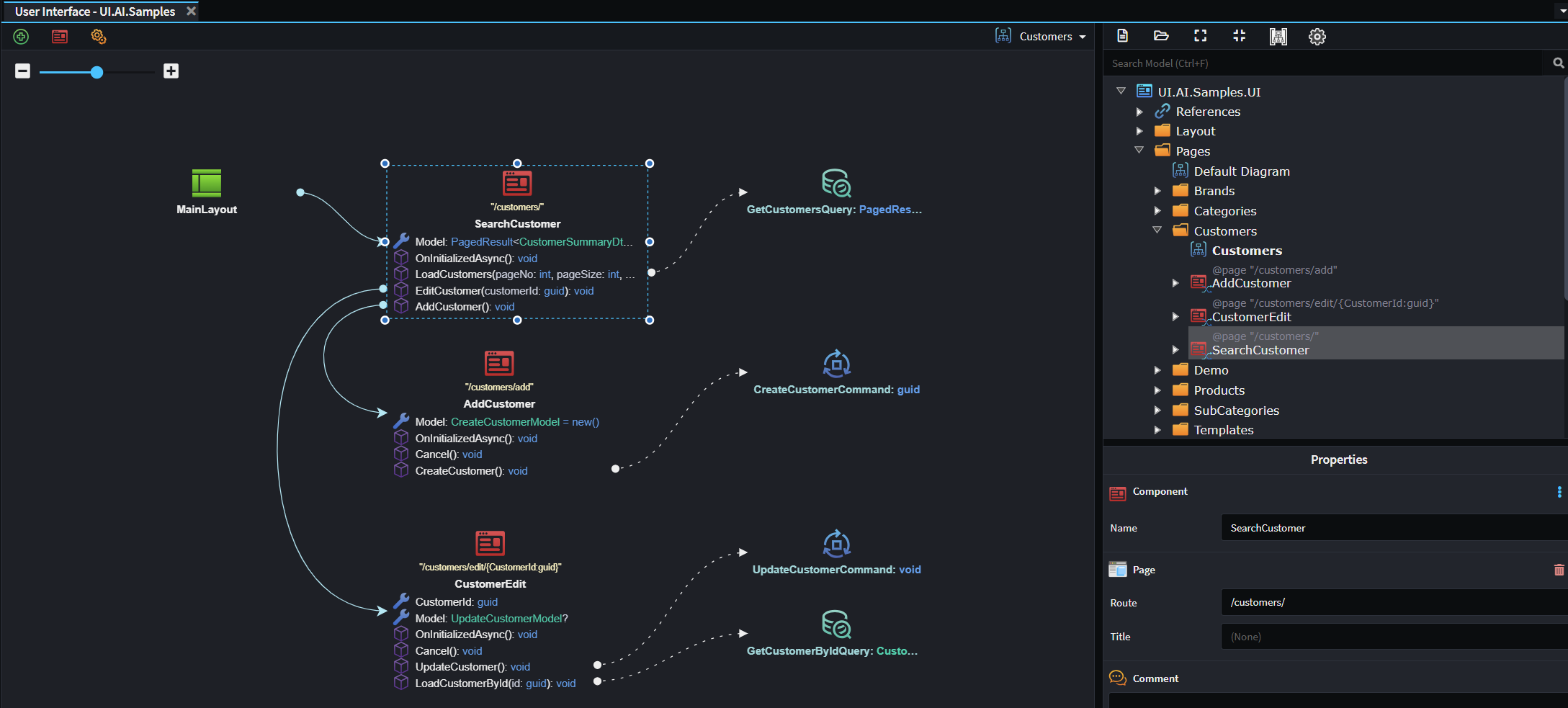
UI modeling
Visual UI modeling defines how users interact with your system, mapping screens, service calls, and flows that shape the end-to-end experience, with AI accelerators helping fill in the details.
Living documentation
The visual models aren’t just diagrams, they’re true reflections of your architecture and implementation. When you run the Software Factory, it analyzes your design and proposes code updates to bring the solution into alignment with your modeled intent. Developers can review and apply these changes directly within their workflow, ensuring that architectural intent is consistently and transparently reflected in the codebase.
🔄 Think of it as "design-driven development", visual models inform code generation, and generated code maintains fidelity with the design.
Designed for collaboration and clarity
Intent Architect’s modeling environment makes architecture a shared, inspectable artifact rather than a hidden understanding in developers’ heads. Teams can annotate, discuss, and validate decisions directly within the modeling environment, so architecture reviews are visual, contextual, and actionable.
👥 No more separate whiteboards or UML tools. Your architecture lives where your code lives.